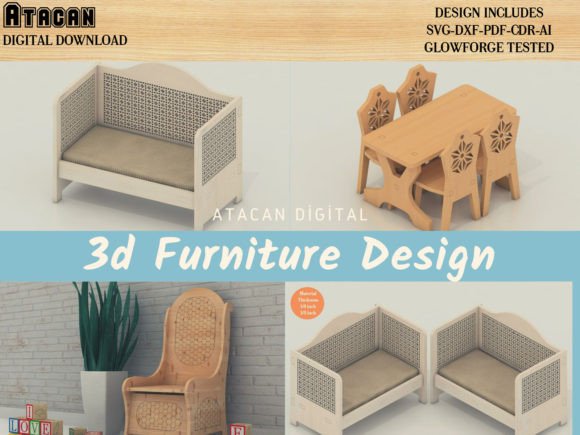
3d Furniture Bundle, DollHouse Miniature
As a designer who spends half my life troubleshooting stitch errors and the other half obsessing over how a finished piece feels in the hand, I approach every new design file with a mix of skepticism and curiosity. Recently, I came across the 3d Furniture Bundle, DollHouse Miniature. At first glance, the name suggests a niche product for laser cutting enthusiasts, specifically those using Glowforge machines. However, as someone deeply embedded in the world of machine embroidery, I had to look past the initial categorization and evaluate this asset purely on its potential visual impact, structural integrity, and suitability for real-world embroidery projects.
The core question was simple: Can a design rooted in miniature furniture aesthetics translate effectively into thread? Does it have the character to stand out in a crowded Etsy marketplace, or is it just another generic clipart vector waiting to be digitized poorly? After spending an afternoon testing various iterations and mockups, here is my practical review of how this design performs when translated into an embroidery project.
First Impressions and Visual Personality
The moment you open the files associated with the 3d Furniture Bundle, DollHouse Miniature, the layout strikes me as clean and deliberate. The aesthetic leans heavily into the "tiny home" trend that has taken social media by storm. It isn’t just a chair or a table; it’s a narrative. The shapes are distinct, offering clear negative space that is crucial for successful digitizing. For an embroidery file to work well, especially one intended for small-scale applications, clarity is king. This design delivers that clarity.
Mood-wise, it evokes warmth, nostalgia, and meticulous craftsmanship. It feels like something you would find in a curated boutique nursery or a high-end craft fair booth. The visual personality is playful yet sophisticated enough to appeal to adult collectors of miniatures. When I looked at the raw vectors, I immediately thought about how the lines would hold up under a satin stitch versus a fill stitch. The outer contours are smooth, which promises good registration, while the internal details offer opportunities for texture variation if handled correctly by the digitizer.
Real-World Application: From Screen to Stitch
I decided to test this design not on a standard white cotton tee, but on items where detail matters more than bold graphics. My primary test case was a custom embroidered patch for a tote bag design. Tote bags are a staple for any craft business, but they require designs that can withstand friction and frequent washing without pilling or losing definition.
When I placed the 3d Furniture Bundle, DollHouse Miniature onto a canvas tote mockup, the scale felt right. It didn’t overwhelm the bag, nor did it get lost in the fabric weave. The miniature furniture theme pairs beautifully with the utilitarian nature of a tote, creating a juxtaposition that customers love. It suggests a lifestyle—organized, cozy, and creative. This kind of thematic cohesion is what drives sales for an Etsy seller. It’s not just a picture of a chair; it’s an invitation to imagine a smaller, tidier world.
I also experimented with applying this design to baby clothes. The soft, rounded edges of the miniature furniture pieces make it surprisingly gentle-looking, despite being geometric. On a onesie or a burp cloth, the design reads as whimsical rather than rigid. However, this required careful selection of thread colors. I opted for pastel mutes rather than bright primaries, which allowed the intricate details of the miniature sofa or lamp to breathe. The result was a personalized gift that felt premium and thoughtful, exactly the kind of item that commands a higher price point.
Technical Considerations and Pitfalls
While the artistic merit is high, we must talk about the technical execution. Not all fabrics play nice with complex, small-scale designs. If you are planning to use this for custom apparel like sweatshirts or caps, you need to be mindful of the stitch density. Because the original design assets are likely optimized for laser cutting (SVG/DXF), they may contain fine lines that do not translate well to thread. A line that looks crisp under a laser beam might merge into a muddy blob under dense embroidery stitches.
I strongly advise testing the design on scrap fabric first, particularly on textured fabrics or thin materials. On a slouchy beanie or a curved cap surface, the distortion can ruin the delicate proportions of the miniature furniture. The design works best on stable, woven fabrics like denim, canvas, or tight-knit cotton blends. Avoid stretchy knits unless you are using a heavy-duty stabilizer to prevent puckering.
Another critical factor is the hoop size. The 3d Furniture Bundle, DollHouse Miniature shines in smaller hoops where every millimeter counts. Trying to scale this up too large can expose the limitations of the digitization, making the furniture look blocky rather than detailed. Conversely, shrinking it too small risks losing the charm entirely. Finding that sweet spot is key to maintaining the professionalism of your final output.
Strategic Value for Sellers and Makers
For digital product sellers and design assets creators, this bundle offers a unique angle. The "dollhouse" theme is evergreen. It sells year-round, but it sees spikes during holiday seasons, making it perfect for holiday embroidery collections. Imagine a set of miniature ornaments or a cozy reading nook scene created from these elements. The versatility allows you to create multiple products from a single asset pack.
From a branding perspective, using such a specific and charming design helps establish a consistent identity. If you run a shop focused on home decor or handmade gifts, this design reinforces your brand’s commitment to quality and attention to detail. It builds customer trust because it shows you care about the nuances of your craft. Buyers can tell the difference between a mass-produced print and a carefully executed embroidered patch that respects the source material.
However, a word of caution regarding licensing. Since the product description mentions compatibility with laser machines and specific file formats like SVG, DXF, AI, and CDR, it is vital to confirm whether these files are ready-made embroidery digitizations or merely vector outlines. If they are vectors, you will need to digitize them yourself or hire a professional. Ensure you understand the commercial embroidery rights before listing your finished products. Misunderstanding license terms can lead to costly legal issues down the road.
Final Verdict
The 3d Furniture Bundle, DollHouse Miniature is more than just a novelty item; it is a versatile tool for designers who want to tap into the miniature and home decor markets. Its strength lies in its clear shapes and emotional resonance. When executed with proper stabilizer support and appropriate thread colors, it transforms from a simple graphic into a tactile, desirable object.
I recommend this for makers who are willing to invest time in testing and refinement. It is not a "plug-and-forget" design for beginners who expect instant perfection on every fabric type. But for those who understand the art of the embroidery project, this bundle offers a solid foundation for creating beautiful, marketable goods. Whether you are designing for a boutique client or stocking your own online shop, the DollHouse Miniature adds a layer of charm that resonates deeply with today’s consumer. Just remember to check your hoop sizes, inspect your stitch density, and always test before you sell.